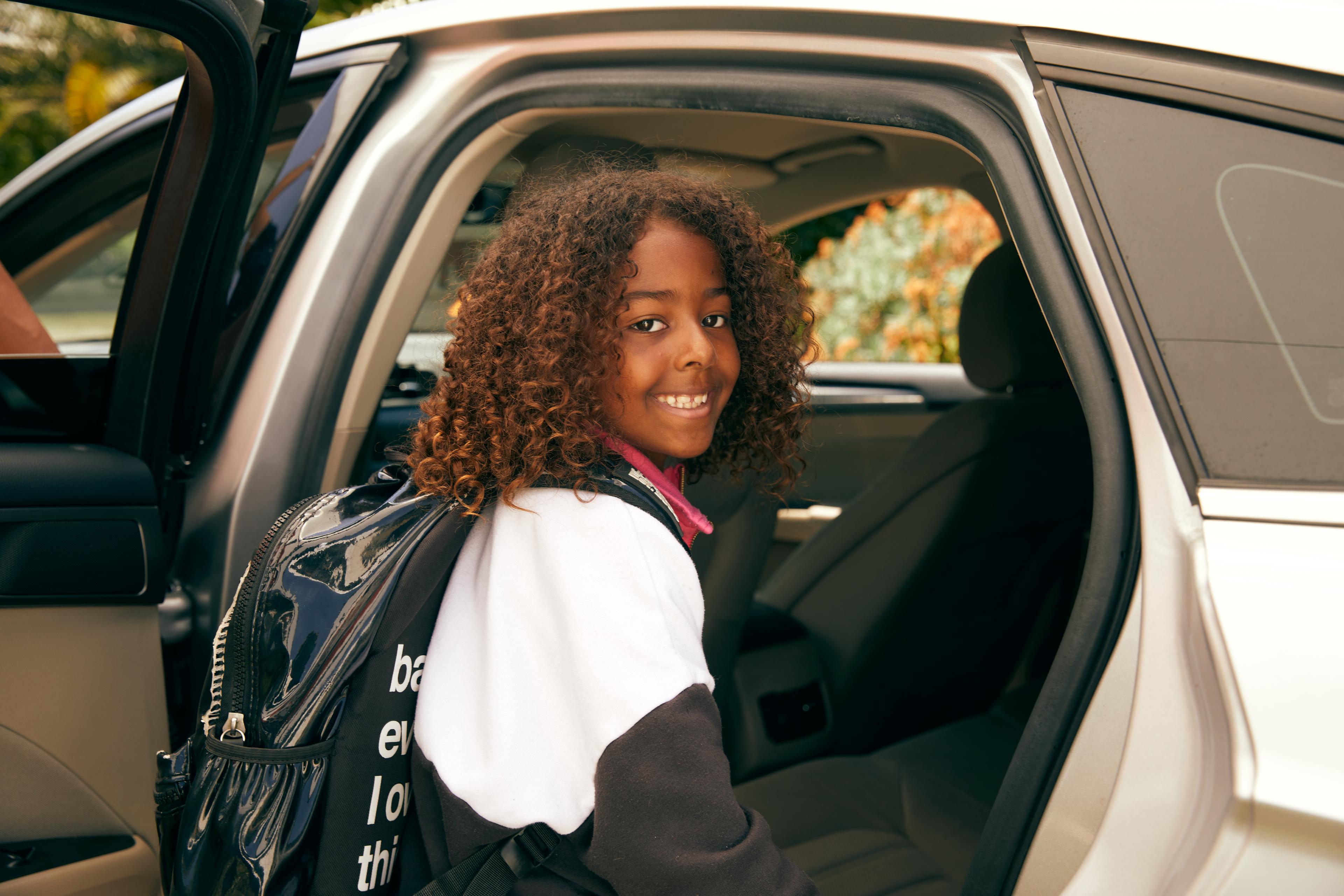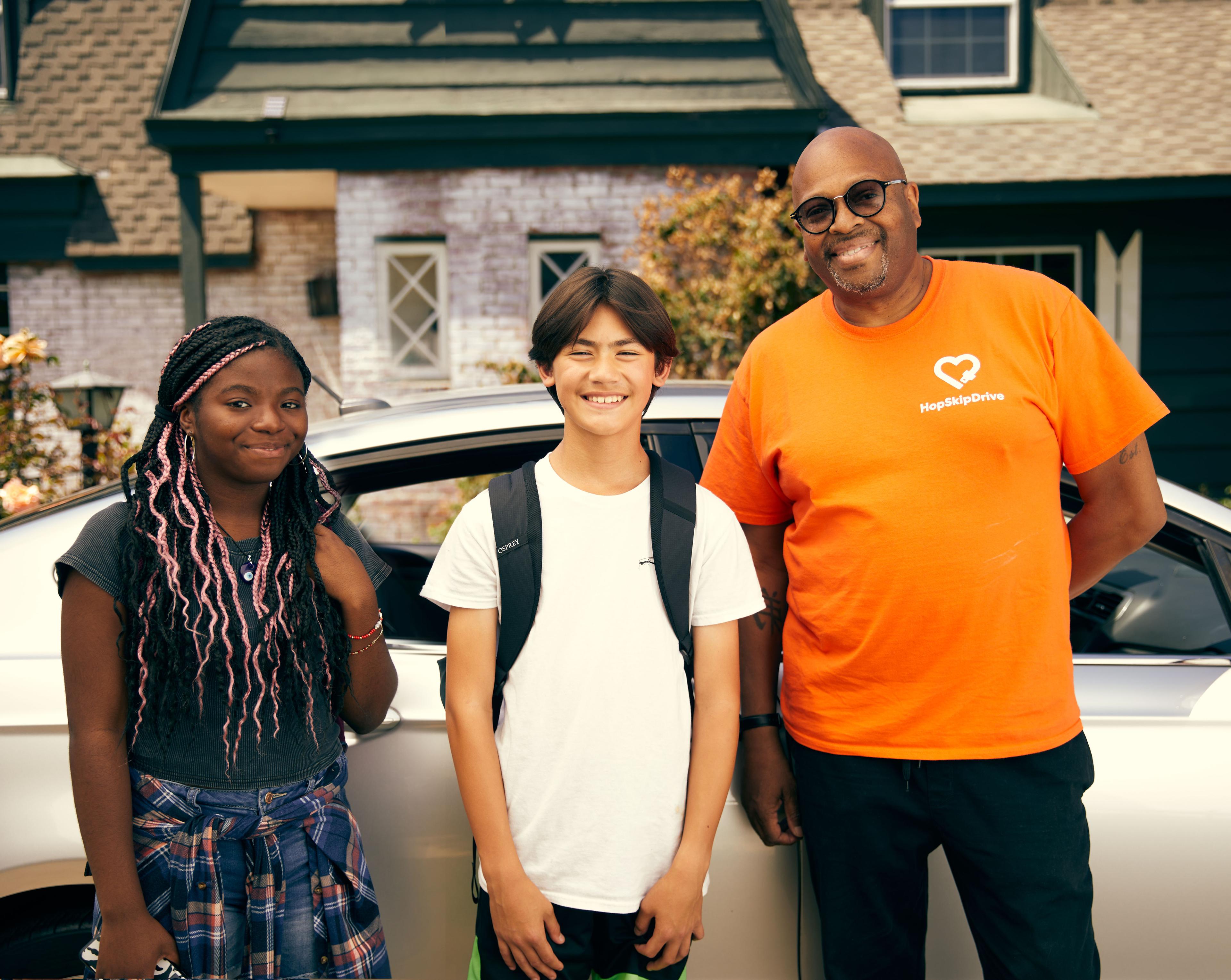
For students experiencing homelessness, every day of school is a lifeline. Research proves that stability is the bedrock of academic achievement yet for our most vulnerable students, the very system designed to provide that stability — transportation — is what they wait for the longest.
At HopSkipDrive, we recently took a deep dive into our data to understand the timeline of McKinney-Vento (MKV) transportation, and we discovered a troubling trend. As the school year progresses, a significant gap emerges between when a school district sets up a ride and when it occurs for students experiencing homelessness compared to their peers. Stability can’t wait, and with the right alternative student transportation model, it doesn’t have to.
HopSkipDrive’s direct driver relationship enables us to arrange a ride with just six hours’ notice. This capability means that by working together, we can shrink, and hopefully eliminate, this gap to ensure transportation never gets in the way of a child being in school.
The Data: A Widening Gap
When school starts in August, the “scheduling lag” — the time between when a ride is created in our system and when it actually occurs — is relatively consistent across student groups, like those with IEPs, in foster care, in career and technical education, and more. However, once the initial back-to-school rush settles, a unique disparity emerges for MKV rides.
Our data shows that by mid-year, the median time between a MKV ride being booked and its scheduled start date can be up to 10 days longer than for other student populations. During those 10 days, that student may have other transportation or may be ironing out home locations while relying on a patchwork of buses, neighbors, or long walks. But “patchwork” isn’t the same as “reliable.” Also, it’s important to note this 10-day lag does not include any time spent identifying a child as needing transportation, which suggests this instability occurs for even longer.
Think about that: For a child already facing the trauma of housing instability, nearly two weeks without a ride to their school of origin means lost instruction, missed meals, disconnected friendships, and a total loss of momentum. Missing just five days of school puts a child halfway to being chronically absent. When the wait is 10 days, the system itself becomes the barrier.
Why the “Standard” Process Fails
Why does this gap exist? To understand the numbers, we spoke with Greg Dutton, a former Director of Transportation. He highlighted a complex web of administrative hurdles that often slow these systems down. “Most transportation teams are going to need at least 48 hours to get transportation set up . . . and that’s if it isn’t ‘complicated.’”
Greg explained further how these administrative issues have likely made transportation teams feel they have no choice but to wait days or a week to start transportation:
Communication Silos: Information often moves slowly between MKV liaisons and the transportation department.
Connectivity Issues: Many families in transition have transient phone service. In a traditional system requiring 48+ hours of lead time, one missed call can reset the entire scheduling clock.
The Complexity of Cross-District Coordination: If a student is placed in a shelter or hotel outside of their home district, multiple agencies must coordinate, often requiring official forms and inter-district agreements that can take days to process.
The Broker “Black Hole”: Districts that rely on brokers to subcontract rides to third-party service providers experience a “game of telephone” where the broker has to wait for a subcontractor to find a driver, who then has to confirm availability. This can create a false sense that long lead times are necessary, despite the negative impact on students themselves.
The McKinney-Vento Act was designed to remove barriers to education. If a child has to wait 10 days for a ride to start, the system is inadvertently creating a new barrier.
Transportation teams are pulled in many directions, and have increasing demands on their time. School districts deserve partners that make their lives easier, not harder. HopSkipDrive is designed to specifically resolve these challenges for school district teams, showing them that immediate transportation is possible. We give school districts the tools they need to quickly, easily, and affordably get transportation set up and started for students who need it.
The HopSkipDrive Difference: Direct Accountability
We don’t believe a student experiencing homelessness should ever have to wait 10 days for a ride. Because HopSkipDrive is a fully licensed and regulated Transportation Network Company (TNC) — not a broker — we eliminate the middleman and the wait. With a network of highly vetted drivers, we are ready to fulfill transportation needs with short notice.
The HopSkipDrive Difference: Speed and Reliability
At HopSkipDrive, we believe there is no reason for a student experiencing housing instability to wait over a week for a ride. Our platform is designed for agility, even when needs arise at the very last minute. While traditional student transportation systems and vendors struggle with even a 48-hour minimum lead time, our direct model enables rides in just hours, ensuring no child has to miss school due to a vendor’s process.
Speed Without the Scramble: We offer an industry-leading six-hour turnaround for new rides and just two hours for location changes. If a student moves at 8:00 p.m., they can still get to school the next morning.
Direct Driver Relationships: We don’t “bid out’ your rides. We maintain a direct relationship with every CareDriver. Our technology matches rides in minutes — sometimes seconds — ensuring the student is covered immediately.
Meeting Urgent Needs: Our data confirms our flexibility and readiness.
Rides have been matched to a highly vetted CareDriver in as little as six seconds after being booked.
We have arranged for rides to begin just a few minutes after the initial ride request.
The fastest end-to-end fulfillment for urgent MKV needs — from the moment the request was created to the CareDriver’s arrival at pickup — occurred in as little as 14 minutes.
Caregivers, Not Just Drivers: Our “caregivers on wheels” average 10 years of caregiving experience and are educated in trauma-informed care and how to support neurodivergent riders. They provide the dignified, uniform experience these students need to feel safe and ready to learn the moment they step out of the car.
Total Visibility: We solve the “missed call” problem. Our app provides real-time tracking and automated alerts for parents, transportation, MKV liaisons, and school staff, ensuring everyone is on the same page without the endless phone tag.
These metrics highlight our platform’s ability to act as an immediate safety net for students experiencing housing instability who require unscheduled or emergency transportation. Beyond the safety net, we bypass the “Did they get the message?” uncertainty by managing communication and tracking directly within our platform. We bridge the gap between the district and the family, ensuring parents know exactly when and where the pickup will happen, regardless of their phone plan status or service limitations.
This efficiency ensures students experiencing homelessness with immediate needs are matched and transported within very tight windows, maintaining high reliability even when the clock is against us.
Closing the Gap
Every day a student waits for a ride is a day they risk falling behind. The data is clear: The current “standard” for McKinney-Vento transportation is leaving students in the lurch.
By partnering with direct, tech-powered solutions, school districts can close the 10-day gap. We can ensure that when a child’s life is in flux, their education remains a constant.
For a student experiencing homelessness, stability can’t wait. And with HopSkipDrive, it doesn't have to.
Ready to eliminate the lag time in your district?
Learn how RideIQ can get students experiencing homelessness in your district to school in hours, not weeks.