Highlights from Our IEP Transportation Webinar
When a handful of students with specialized needs becomes a full-time logistics challenge for a transportation department, the students aren’t the problem. A one-size-fits-all approach to school transportation doesn’t work for every student, especially those with Individualized Education Programs (IEPs) and diverse neurodevelopmental needs.
A recent District Administration webinar sponsored by HopSkipDrive brought together experts in student safety, behavioral health, and special education transportation to explore how districts can offer a reliable, safe, and caring experience to support consistency and attendance for students with IEPs and individualized needs.
Panelists included:
Steve Nederveld, Licensed Clinical Therapist and former Director of Mental Health at Cherry Creek Schools
Jenifer Eaton, Board-Certified Behavior Analyst and Co-Founder of Rooted in Play (an organization that aims to address the complex needs of children with a spectrum of behavioral developmental needs)
Jennifer Brandenburger, Senior Vice President of Safety at HopSkipDrive
Together, they focused on how a holistic approach to transportation — including enhanced training and certification informed by child development experts and best-in-class support protocols — can help to ensure students with IEPs and disabilities are able to consistently access their education.
Watch the full webinar on demand to hear directly from the panelists and see their recommendations in action.
Understanding the Full Spectrum of IEP Transportation Needs
Transportation is more than getting students from point A to point B. Under the Individuals with Disabilities Education Act (IDEA), transportation is considered a “related service,” meaning schools must provide it when students with disabilities need transportation to access their education. This can include daily trips to and from school, travel between schools for specialized programs, and access to adaptive equipment such as wheelchair lifts and ramps.
In practice, students who qualify for IEP transportation have a wide range of needs, including:
Physical or medical needs, which may require wheelchair-accessible vehicles, specialized equipment, or medical support
Sensory or learning needs, where communication supports, safety monitors, or mobility guidance can make transportation safer and more predictable
Behavioral or neurodevelopmental needs, including autism, ADHD, or anxiety, where consistency, routine, and empathy often matter more than equipment
As Nederveld explained, transportation staff need to move beyond viewing behavior “as defiance or being oppositional or not caring about school” and instead consider what a student may be trying to communicate.
The “Grey Area”: Where One-Size-Fits-All Transportation Fails
Many students with IEPs fall into what the panelists described as a “grey area” that can be difficult to accommodate with traditional transportation models.
“Most students in this grey area don’t need specialized vehicles or specialized equipment. What they do need is a calm environment, a familiar face, and a really predictable routine.”
—Jennifer Brandenburger, SVP of Safety, HopSkipDrive
When districts rely on one-size-fits-all transportation models, staff often lack the context needed to respond appropriately to student behavior. Without that understanding, adults may unintentionally escalate situations — particularly when discipline is used instead of support. For students with behavioral disabilities, challenging behavior is often part of the disability itself, not intentional defiance.
That misinterpretation is also where empathy can break down. Eaton emphasized that students with non-visible disabilities frequently receive less empathy than those with physical or visible needs, even though their supports are just as essential.
The consequences of missing this grey area show up clearly in attendance data: Students with disabilities are 36% more likely to be chronically absent, according to the U.S. Department of Education.
Closing this gap requires districts to move beyond one-size-fits-all models and right-size transportation support to reflect what each individual student actually needs. As Brandenburger noted, “Anyone can put a child on a bus, but it’s [about] getting them transportation that feels safe.”
Getting IEP Transportation Right With Training and Preparation
Pairing students with the right transportation starts with a shift in perspective. Instead of reacting to challenging behavior in the moment, transportation staff need the skills to anticipate triggers, recognize signs of escalation, and respond with intention.
Trauma-informed and behavior-focused training helps drivers and transportation staff understand that behavior is a form of communication. When staff are prepared with that lens, they’re less likely to make assumptions and more likely to respond with empathy and consistency.
This approach rests on five core areas:
Understanding disabilities and behavior, with an emphasis on identifying triggers and supporting regulation
De-escalation and crisis response, including knowing when to escalate concerns and who to contact
Communication skills, so key information about supports, routines, and safety is shared clearly
Safety and emergency protocols, particularly for medical concerns or high-risk situations
Legal and ethical responsibilities, including confidentiality and alignment with IEPs and behavior plans
Read Jen Brandenburger’s article, “Supporting Students with Trauma-Informed School Transportation,” in School Bus Fleet
Putting Training into Practice
Training is one thing; putting it into practice in daily operations is another. Once students are in motion, small decisions about routines, communication, and environment can shape how a ride unfolds. Translating training into a consistent experience across vehicles and drivers enables districts to support students reliably, rather than relying on ad hoc adjustments from ride to ride.
Collaboration between districts and transportation providers determines how clearly expectations are shared. Drivers don’t need full access to a student’s IEP, but they do need a common understanding of safety priorities and agreed-upon response protocols so transportation aligns with what’s happening in school.
After a challenging ride, the focus should shift to learning rather than resolution. Reviewing the situation with the driver, district staff, and caregivers helps surface patterns that aren’t always visible in the moment and creates a shared reference point for future rides. Over time, those conversations support greater consistency for students and clearer expectations for the adults supporting them.
Setting A New Standard for Safety and Care in IEP Student Transportation
HopSkipDrive’s approach to IEP transportation builds on the same principles that make training effective in day-to-day operations: consistency, preparation, and matching support to student needs. Our CareDriver education program was developed in partnership with child development experts like Eaton and Nederveld, and it centers on how drivers respond in real situations.
That education is reinforced through a thorough, skills-based certification process that evaluates more than driving history alone. CareDrivers are screened using scenario-based assessments that look at empathy, judgment, and decision-making when supporting students with disabilities and higher needs.
Once CareDrivers are certified, districts can access different levels of transportation support through HopSkipDrive depending on what a student requires, including:
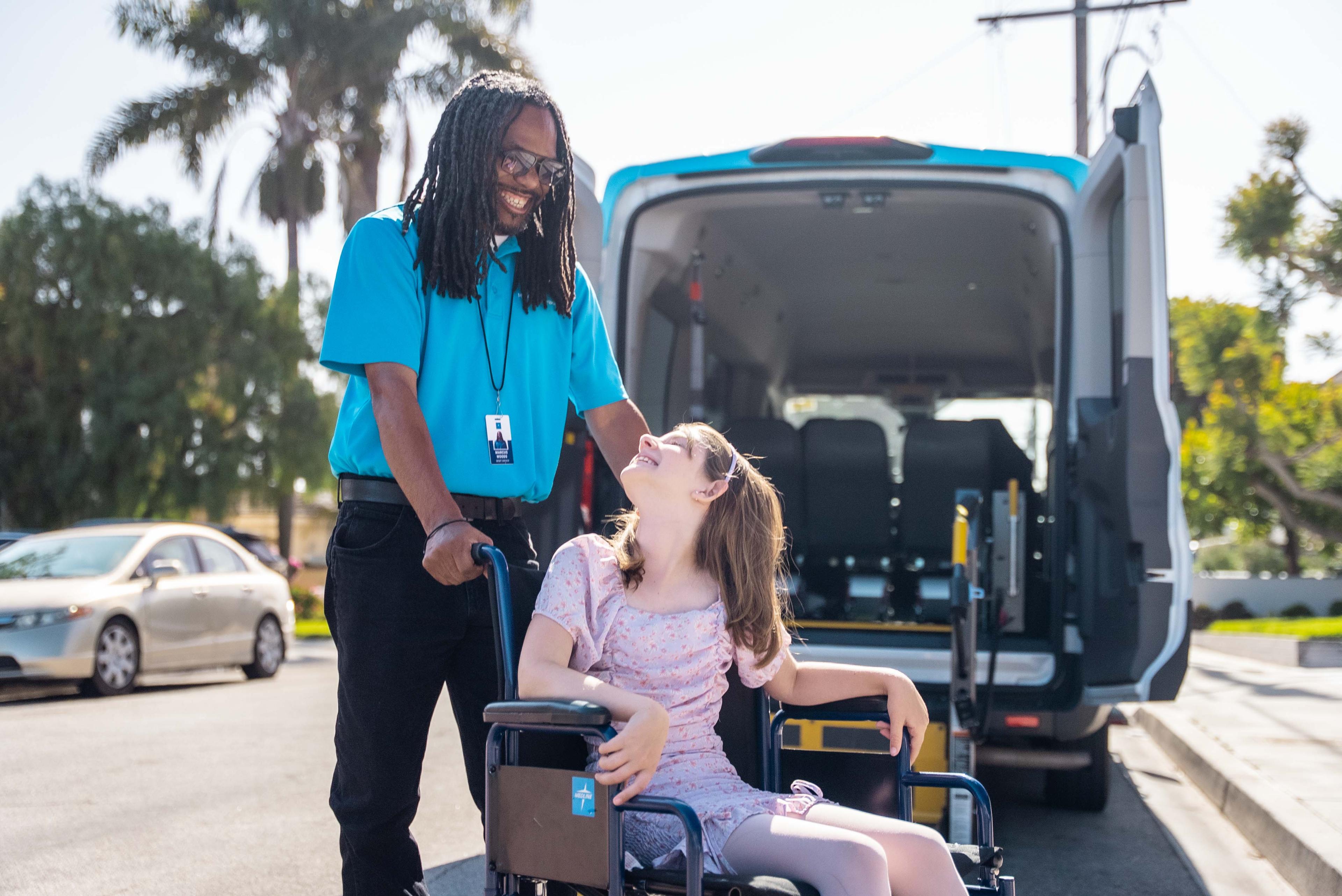
Wheelchair-Accessible Vehicle (WAV) rides for students with higher physical support needs
Rider Assistants for students who need support from an additional adult in the vehicle
Car Seat Program for younger students or those requiring specialized seating
Every HopSkipDrive ride is designed to create a consistent experience that allows students with special needs to thrive. The result is a system that maintains consistent safety standards while giving students the best level of care for their needs.
Transportation That Meets Students Where They Are
Our human-centered approach to IEP transportation is already working in districts across the country, where specialized transportation has helped address chronic absenteeism, staffing challenges, and support for vulnerable students.
Prosper Independent School District uses our Rider Assistant program to provide support for siblings with disabilities, which frees up staff to focus on their core work.
Rocky Mountain Prep initially partnered with us to provide reliable transportation for students with IEPs. Due to our proven success in accommodating the needs of diverse student populations, the school opted to expand the partnership to offer inclusive experiences for students with disabilities with our wheelchair-accessible vehicle rides.
Transportation shouldn’t be the reason a student misses school or refuses to go. And for districts working to support students with IEPs, it doesn’t have to be with HopSkipDrive.
Ready to Explore How Specialized Transportation Can Support Your Students with IEPs?
Watch the webinar for detailed implementation strategies, and connect with us to learn how partnering with HopSkipDrive can give your district safer, more supportive transportation solutions.